
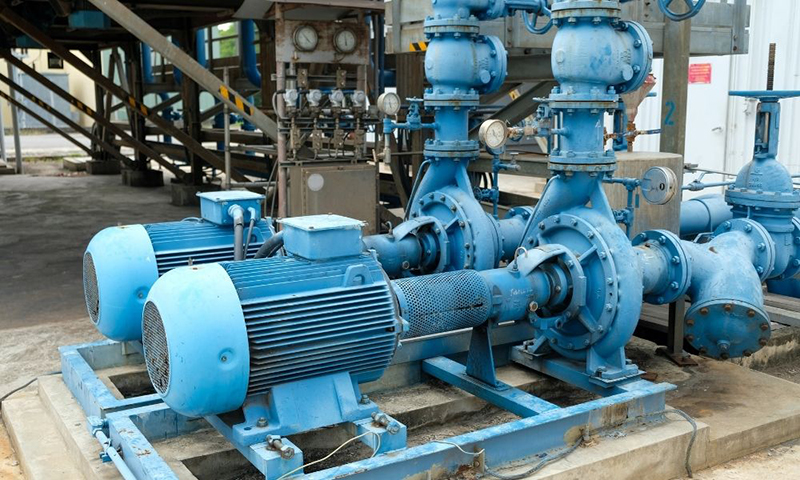
Industrial systems rely heavily on precision fluid handling to maintain efficiency, consistency, and safety. Among the most reliable solutions available today are industrial gear pumps, which are widely used for transferring viscous liquids, lubricants, and chemicals across various sectors. Their simple design, durability, and ability to operate under demanding conditions make them a cornerstone of modern manufacturing processes.
This article explores the different types of industrial gear pumps, how they function, and their practical applications across industries. It also highlights the growing importance of High pressure gear pumps in advanced production environments.
What Are Industrial Gear Pumps
Industrial gear pumps are positive displacement pumps that use rotating gears to move fluids. They operate by trapping liquid between gear teeth and the pump housing, then transferring it from the inlet to the outlet. This mechanism ensures a steady and consistent flow, making these pumps ideal for handling thick and viscous substances.
Unlike centrifugal pumps, gear pumps maintain performance regardless of pressure variations, which is why they are commonly used in applications where precision and reliability are critical.
Main Types of Industrial Gear Pumps
Understanding the different types of industrial gear pumps helps manufacturers choose the right solution for specific operational needs. Each type offers distinct advantages depending on the application.
External Gear Pumps
External gear pumps are among the most widely used types. They consist of two identical gears rotating in opposite directions within a casing. As the gears rotate, fluid is drawn into the pump and carried around the outer edges before being discharged.
These pumps are known for their simplicity, cost effectiveness, and ability to handle a wide range of viscosities. They are commonly used in industries such as oil and gas, chemical processing, and food production.
Applications include lubrication systems, fuel transfer, and hydraulic power units. Their compact design and high efficiency make them suitable for continuous operation in demanding environments.
Internal Gear Pumps
Internal gear pumps feature a rotor and an idler gear that rotate inside a larger outer gear. A crescent shaped spacer separates the gears and helps maintain flow efficiency.
These pumps are particularly effective for handling highly viscous fluids such as asphalt, adhesives, and resins. Their smooth and quiet operation makes them ideal for processes where minimal pulsation is required.
In modern manufacturing, internal gear pumps are often used in polymer processing, food handling, and chemical blending systems. Their ability to maintain a consistent flow even at low speeds is a significant advantage.
Gerotor Pumps
Gerotor pumps are a specialized type of internal gear pump. They consist of an inner rotor and an outer rotor with one additional tooth. This design creates chambers that expand and contract as the rotors turn, moving fluid through the pump.
These pumps are commonly found in automotive and lubrication systems. They are compact, efficient, and capable of operating at moderate pressures.
In manufacturing environments, gerotor pumps are often used for oil circulation, coolant transfer, and precision fluid dosing applications.
Lobe Pumps
Although technically different from traditional gear pumps, lobe pumps share similar operating principles. They use rotating lobes instead of gears to move fluid.
Lobe pumps are widely used in industries where hygiene and product integrity are essential, such as food processing and pharmaceuticals. They can handle solids and delicate materials without causing damage.
Their ability to maintain a gentle flow makes them suitable for applications involving sensitive fluids or shear sensitive products.
High Pressure Gear Pumps and Their Importance
As manufacturing processes become more complex, the demand for High pressure gear pumps continues to grow. These pumps are designed to operate under extreme pressure conditions while maintaining efficiency and reliability.
High pressure gear pumps are essential in hydraulic systems, where they provide the needed pressure to operate heavy machinery. They are also used in injection molding, metal forming, and high precision machining processes.
Their robust construction allows them to handle demanding workloads without compromising performance. This makes them a preferred choice in industries that require consistent output under challenging conditions.
Applications of Industrial Gear Pumps in Modern Manufacturing
Industrial gear pumps play a vital role across a wide range of manufacturing sectors. Their versatility and reliability make them indispensable in both traditional and advanced production systems.
Chemical Processing
In chemical manufacturing, precise fluid handling is critical. Industrial gear pumps are used to transfer chemicals, solvents, and acids safely and efficiently. Their ability to handle corrosive and viscous fluids makes them ideal for this environment.
They are also used in dosing and mixing processes, where accurate flow control is essential for maintaining product quality.
Food and Beverage Industry
The food industry relies on gear pumps for handling syrups, oils, and other viscous ingredients. Internal gear pumps and lobe pumps are particularly popular due to their gentle handling capabilities.
These pumps help maintain product consistency while ensuring hygiene standards are met. Their design allows for easy cleaning and maintenance, which is crucial in food production.
Oil and Gas Sector
In the oil and gas industry, industrial gear pumps are used for transferring crude oil, lubricants, and fuels. External gear pumps are commonly used for their durability and ability to operate in harsh conditions.
High pressure gear pumps are also essential in drilling and extraction processes, where they support hydraulic systems and fluid injection operations.
Automotive Manufacturing
Gear pumps are widely used in automotive production for lubrication, fuel transfer, and hydraulic systems. Gerotor pumps, in particular, are commonly used in engines for oil circulation.
Their compact size and efficiency make them suitable for integration into complex machinery and assembly lines.
Pharmaceutical Production
In pharmaceutical manufacturing, precision and cleanliness are critical. Gear pumps are used to handle active ingredients, solvents, and other fluids with accuracy and care.
Their ability to deliver consistent flow rates ensures that formulations meet strict quality standards. Lobe pumps are often preferred for their sanitary design and gentle handling.
Advantages of Using Industrial Gear Pumps
Industrial gear pumps offer several advantages that make them a preferred choice in modern manufacturing.
They provide a consistent and reliable flow, regardless of pressure changes. This ensures stable operation and reduces the risk of process interruptions.
Their simple design makes them easy to maintain and repair. This helps minimize downtime and reduce operational costs.
They are capable of handling a wide range of viscosities, from thin liquids to thick and sticky substances. This versatility allows them to be used in diverse applications.
High pressure gear pumps add another layer of capability by enabling operations under demanding conditions. Their strength and durability make them suitable for heavy duty applications.
Key Considerations When Selecting a Gear Pump
Choosing the right gear pump requires careful evaluation of several factors.
Fluid properties play a significant role. Viscosity, temperature, and chemical composition must be considered to ensure compatibility with the pump.
Pressure requirements are also important. High pressure gear pumps are necessary for applications that involve heavy loads or high المقاومة.
Flow rate requirements should be matched with the pump’s capacity to ensure efficient operation.
Material selection is crucial for durability and performance. Pumps must be made from materials that can withstand the specific conditions of the application.
Maintenance requirements and ease of installation should also be considered to ensure long term efficiency.
Future Trends in Gear Pump Technology
The evolution of manufacturing technologies is driving innovation in gear pump design. Modern industrial gear pumps are becoming more efficient, compact, and adaptable.
Advanced materials are being used to improve durability and مقاومت to wear and corrosion. This extends the lifespan of pumps and reduces maintenance needs.
Automation and smart monitoring systems are also being integrated into pump operations. These technologies allow for real time performance tracking and predictive maintenance.
High pressure gear pumps are being further optimized to handle extreme conditions with greater efficiency. This supports the growing demand for high performance manufacturing systems.
Sustainability is another key focus. Manufacturers are developing pumps that consume less energy and reduce environmental impact.
Industrial gear pumps are a fundamental component of modern manufacturing, offering reliable and efficient fluid handling across a wide range of industries. From external and internal gear pumps to specialized designs like gerotor and lobe pumps, each type serves a unique purpose.
The increasing use of High pressure gear pumps highlights the need for robust solutions capable of supporting advanced industrial processes. As technology continues to evolve, these pumps will remain essential in driving efficiency, precision, and innovation in manufacturing systems.
By understanding the different types and applications of industrial gear pumps, businesses can make informed decisions that enhance productivity and ensure long term operational success.
